

As a Superhost in Charlotte and a professional photographer, I’ve seen it firsthand: many Airbnb listings are leaving money on the table.
With my experience photographing over 300 short-term rentals, I know the right strategies can make a big difference.
From stunning images to smart pricing, small changes can lead to bigger profits.
Let’s dive into proven methods to boost your nightly rate and stand out from the competition.
Key Takeaways
- Invest in professional photography to increase booking inquiries by 2.5x and justify higher nightly rates through enhanced perceived value.
- Implement dynamic pricing tools like PriceLabs to optimize rates based on real-time demand and capture 10-15% peak season increases.
- Upgrade strategic amenities like king beds, fully-equipped kitchens, and high-speed Wi-Fi to differentiate from competitors and command premium pricing.
- Analyze competitor pricing and local market rates to identify 20-30% rate increase opportunities while maintaining competitiveness.
- Create engaging, keyword-rich descriptions highlighting unique features and local attractions to increase appeal and support rate increases up to 20%.
Why most Airbnb hosts undercharge for their property
When you’re starting out as an Airbnb host, it’s easy to underprice your property—and that decision can cost you thousands of dollars every year. You don’t fully understand your local market, so you price conservatively. Meanwhile, your competitors down the street charge 20-30% more for similar properties.

Here’s what I’ve seen repeatedly: hosts ignore guest feedback that reveals what people actually value. A five-star review mentioning your “beautiful photography” or “stunning kitchen” signals you can increase your Airbnb nightly rate. Yet many hosts miss these signals entirely.
You’re also relying on outdated pricing strategies. Without dynamic pricing tools, you can’t capitalize on real-time demand spikes or local events. This passive approach to your Airbnb pricing strategy directly limits your ability to increase Airbnb income.
The solution? Stop guessing. Study your market. Listen to your guests. Invest in your listing’s presentation. Professional photos likely deserve more than you’re charging.
The single biggest factor in your nightly rate — your photos
Your photos are the gateway to everything else—they’re what determines whether a potential guest even considers booking your property or scrolls past it in two seconds. I’ve photographed over 300 Charlotte properties, and here’s what I’ve learned: your images directly impact short term rental pricing and airbnb revenue optimization.
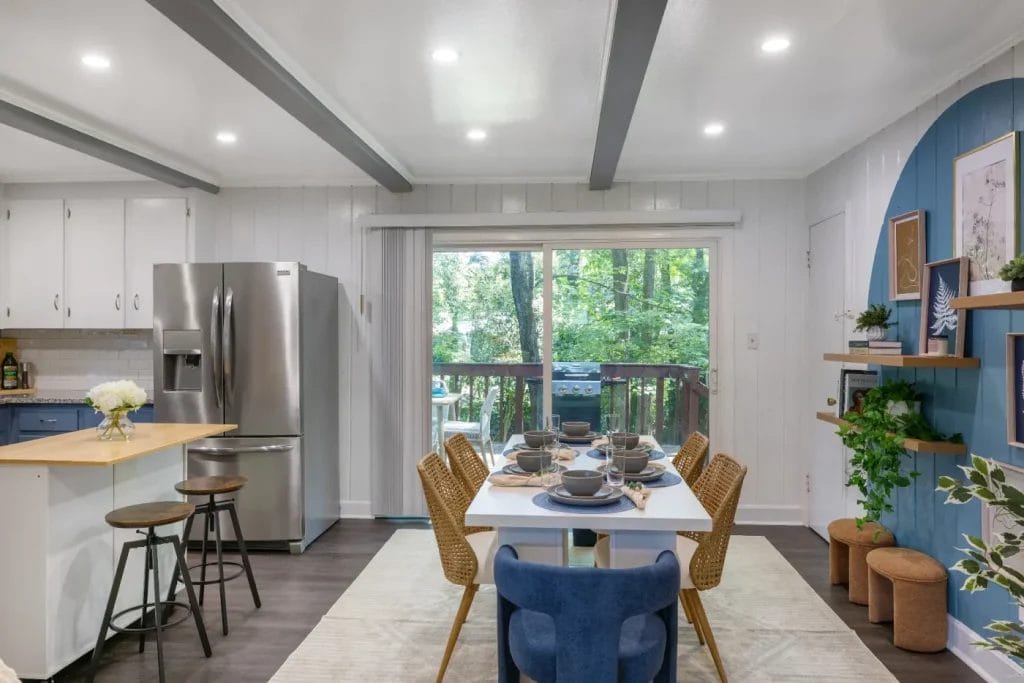
The numbers don’t lie:
- Professional photos increase booking inquiries by 2.5 times compared to amateur shots
- High-quality images boost booking rates up to 40%
- Well-staged photos enhance perceived value, justifying higher nightly rates
- Natural lighting and clutter-free spaces create immediate appeal
- Regular updates keep your listing fresh and competitive
- Investing in professional photography can cost as little as $300 for properties up to 1000 sq ft(Airbnb Photography Pricing Charlotte NC).
Most hosts underestimate this lever. They’ll invest thousands in renovations but skimp on photography. That’s backwards. Professional photos show off what you’ve built. They attract quality guests willing to pay premium rates. Your photos aren’t just pictures—they’re your revenue engine.
How to use dynamic pricing tools effectively
Most hosts I’ve worked with are leaving 10-15% in revenue on the table simply because they’re pricing manually—checking competitors once a week, guessing at seasonal adjustments, missing opportunities when demand spikes.

Dynamic pricing tools like PriceLabs and Beyond eliminate that guesswork. They automatically adjust your nightly rates based on real-time market demand, competitor pricing, and local events happening in Charlotte. You’re not constantly monitoring; the software is.
Here’s what I’ve seen work: these tools increase rates 10-15% during peak times and strategically discount 3-5% for last-minute bookings to fill gaps. One host I photographed boosted occupancy greatly during off-peak seasons simply by letting the algorithm align prices with what guests actually wanted to pay.
The key? Review your performance metrics weekly. Tweak settings based on what’s working. Stay responsive to market changes. You’ll reduce manual errors while maximizing revenue potential—that’s the real power here.
Amenity upgrades that justify higher rates
Software handles the pricing math, but here’s what guests actually notice when they walk through your door—the physical experience of your space. I’ve seen hosts increase rates by $30-50 per night simply by upgrading their amenities strategically. These aren’t fancy additions; they’re thoughtful investments that guests genuinely value.

Consider these upgrades:
- King beds instead of queens signal comfort and luxury, justifying premium pricing
- Quality kitchen essentials—real pots, pans, serving dishes—let guests host gatherings and feel at home
- High-speed Wi-Fi and coffee makers meet modern traveler expectations effortlessly
- Cozy touches like throw blankets and varied pillows create that Instagram-worthy atmosphere
- Recreational options such as board games or local experience packages differentiate your listing
The key? Choose upgrades your target guests actually need. Business travelers want reliable Wi-Fi. Families need quality kitchen tools. Couples appreciate luxury linens. Match your investments to your audience, and your rates follow naturally.
Listing description optimization for premium positioning
They describe their space like they’re filling out a form. Generic. Bland. That’s where most hosts leave money on the table.
Your listing description is your sales pitch. You’re not just listing features—you’re painting a lifestyle. Instead of “has Wi-Fi,” try “stay connected with high-speed internet perfect for remote work.” Rather than “kitchen,” describe it as “fully equipped culinary space ideal for preparing gourmet meals.”
Keywords matter. Weave in words like “luxury,” “comfort,” and “local experiences” throughout your description. Airbnb’s algorithm rewards specificity. Guests searching for “luxury Charlotte home” won’t find generic listings.
But here’s what really moves the needle: details. Mention that morning light floods your living room. Note the proximity to upscale dining districts. Highlight unique touches like handpicked local art.
I’ve seen hosts increase rates 20% simply by rewriting their descriptions. Paired with professional photos, you’re not just competing—you’re dominating your market.
Seasonal rate strategy for Charlotte NC
While your listing description and professional photos get guests interested, your pricing strategy is what determines your actual income—and Charlotte’s calendar is your roadmap.

I’ve watched hosts leave thousands on the table by ignoring seasonal demand shifts. Charlotte’s peak seasons aren’t random—they’re predictable opportunities you can capitalize on immediately.
Here’s how I’d approach it:
- Increase rates 20-30% during spring and fall when tourism surges
- Leverage major events like the NASCAR All-Star Race and Democratic National Convention for premium pricing
- Time Carolina Renaissance Festival and CIAA Basketball Tournament weekends for event-driven rates
- Monitor competitor pricing during peak seasons to stay competitive
- Use dynamic pricing tools to automate adjustments based on real-time demand
The winter off-season averages $120 nightly, while peak months exceed $200. That’s not a coincidence—it’s a system. When you align your rates with Charlotte’s natural rhythm, you’re not just reacting to demand. You’re capturing the revenue that was always meant to be yours.
Minimum stay requirements and their impact on rates
How does a two-night minimum suddenly become your secret weapon for boosting revenue? It’s simpler than you think. When you require longer stays, you attract guests seeking stability—remote workers, families on extended vacations, people who value peace over constant turnover. These guests typically accept higher nightly rates because they’re calculating total costs differently.
But here’s where it gets strategic: during slow seasons, drop that minimum to one night. You’ll fill those calendar gaps with last-minute travelers while maintaining your rate integrity. I’ve watched Charlotte hosts implement this dynamic approach and watch their occupancy spike alongside revenue.
The real magic happens when you adjust minimums by season and day of week. Midweek stays? Shorter minimums attract business travelers. Peak season? Longer minimums filter for serious renters willing to pay premium rates. This isn’t guesswork—it’s data-driven revenue management that compounds over time.
How to compete with hotel pricing
Once you’ve mastered minimum stay requirements and seasonal adjustments, you’re ready to tackle a bigger challenge: competing with hotels that seem to undercut your pricing at every turn.
Here’s the truth: you’re not really competing with hotels. You’re offering something fundamentally different. Hotels provide rooms. You provide experiences. That distinction matters enormously when you’re positioning your rates.
To stand out, focus on these differentiators:
- Dynamic pricing tools that monitor local hotel rates and adjust yours strategically
- Unique amenities hotels can’t match—gourmet coffee, premium linens, personalized local guides
- Home-like atmosphere that creates genuine connection versus sterile hotel rooms
- Targeted marketing showcasing your property’s distinctive character on Instagram and booking platforms
- Value packages offering discounts for longer stays that hotels rarely provide
I’ve watched Charlotte hosts stop competing on price alone and start competing on value. They highlighted what made their properties irreplaceable. Their rates climbed. Yours can too when you emphasize what separates you from traditional lodging.
The premium listing checklist — what top earners do differently
There’s a measurable gap between hosts who charge $150 a night and those pulling in $300—and it’s not magic. It’s strategy.
Top earners follow a specific checklist that transforms ordinary listings into premium experiences. They invest in essential amenities like king beds and fully-equipped kitchens because guests perceive these as non-negotiable. They understand that cleanliness isn’t optional—it’s foundational. Thoughtful touches like welcome baskets aren’t extras; they’re conversion tools.
Here’s what separates them: they use professional photography to showcase their space compellingly. They craft descriptions that highlight unique value propositions. They implement dynamic pricing tools like PriceLabs to capture demand spikes during local events.
But there’s something deeper. Premium hosts engage with their community. They network with other hosts, staying current on best practices. They prioritize guest feedback ruthlessly.
Your nightly rate reflects what you’ve built. Premium positioning requires premium execution across every touchpoint.
Frequently Asked Questions
How Long Does It Take to See Revenue Increase After Professional Photography?
You’ll typically see revenue increases within the first few weeks after updating your listing with professional photos. Many hosts experience higher booking rates and can justify increased nightly rates immediately.
Should I Lower Rates During Off-Season or Maintain Premium Pricing Year-Round?
You’ll maximize revenue by using dynamic pricing—maintain premium rates during peak seasons while offering targeted 15-30% discounts for longer off-season stays. This strategy boosts occupancy without sacrificing your overall rate structure.
What’s the Optimal Minimum Stay Length to Maximize Annual Revenue?
You’ll maximize revenue by setting 2-3 night minimums during peak seasons and longer requirements during off-peak periods. This strategy can boost your annual income by 10-15% while reducing turnover costs and attracting remote workers filling calendar gaps.
How Do I Know if My Property Can Command Luxury Pricing?
You’ll know your property can command luxury pricing when you’ve got high-end finishes, exceptional amenities like king beds and gourmet kitchens, a desirable location, and consistently positive guest reviews highlighting comfort and quality.
Can I Raise Rates Mid-Season Without Losing Bookings or Reviews?
Yes, you can raise rates mid-season strategically. You’ll maintain bookings by implementing dynamic pricing, conducting competitor analysis, adding unique amenities, communicating improvements to previous guests, and offering flexible cancellation policies.
Conclusion
As a seasoned Charlotte Airbnb Superhost and professional STR photographer, I can tell you that the right strategies can significantly boost your nightly rates. Focus on enhancing your listing with high-quality photos, strategic amenities, and dynamic pricing to attract better guests and minimize turnover. Remember, your property is worth what you confidently charge. Quality images alone can lead to a noticeable increase in bookings and rates. For more insights or to book a photoshoot that showcases your listing’s best features, visit Charlotte Pixels.